
Keep Connected
Lisa Romano
  • Home
  • About Lisa
  • Services
  • Clients
  • A Walk in My Shoes
  • Experience

 An employee perk more valuable than stock options? 

12/22/2014

0 Comments

 
Picture
Once upon a time, in the not too distant past, there was a marketing director of a technology start-up that was getting ready to launch. This young man toiled long hours and 7 day weeks for several months to get ready for this momentous event. The big day came with a lot of fanfare, excitement, and press and industry attention. The employees were happy and grateful for all the work involved and everyone was on a high. The CEO was ecstatic and expressed his appreciation to the marketing director for making the launch a success at the company meeting that day. The director was happy that his efforts were recognized and continued to work hard for many years contributing to the company’s success.  

It would be wonderful if this fairy tale related how things actually happened, but truth has a slightly different finish. In reality, the CEO never bothered to express his appreciation. What a way to burst a bubble and deflate an otherwise great day. The director wasn’t expecting anything, but was disappointed that he wasn’t even extended the courtesy of a “thank you” by the leader of the company for the extra effort and great results. He continued to perform with high standards on the company’s behalf out of professional responsibility, but never again with the same enthusiasm and joy. He eventually left the company and is now happily and diligently working at a company that appreciates his efforts.

What a difference it would have made if the CEO had thought enough to say thank you.

We’ve all been taught from an early age that treating people with respect and kindness in both our personal and professional lives is something we should do. I’ve found that, unfortunately, it’s rare in the business world and increasingly uncommon in our everyday lives for people to be appreciative of one another. I’m not talking about extreme acts of gratitude, but just two magical words that, when spoken genuinely, make a difference in someone’s day and make them feel valued.

It doesn't take much to say thank you, but the effect can be powerful. When you open a door for someone or let another driver merge in front of you in traffic, you feel good when your effort is acknowledged. When you offer to help someone at work who has a tight deadline and they express their thanks, you’re left with the warm feeling that you’ve been appreciated and you won’t hesitate to help again.

In a business environment leaders should understand the impact that appreciation has on employees and their performance. There’s a large body of evidence to support how important it is to thank your staff and colleagues. In a May 2012 World at Work survey of 834 organizations published by Randstad, an Atlanta-based employment services firm, 76 percent of respondents said feeling valued was the most important factor for happiness at work. The research also found that in organizations where recognition occurs, employee engagement, productivity, and customer service are about 14 percent better than in those where recognition does not occur. While 14 percent may not seem worth getting excited about, consider that this improvement/gain comes as a result of something that costs nothing. And 14 percent can be that tipping point to a great customer experience, low employee turnover, increased revenue, closing that big account, and more.

Some executives do it right. The following story was related by a manager at REI explaining why he loves working at the company, as told in the book “The Trustworthy Leader” by Amy Lyman.

“Some members of my team delivered excellent customer service to a father and his autistic son. Well, the father mentioned his experience on a blog. People at headquarters up to the CEO heard [about] and read the blog. The CEO herself, Sally Jewell, sent me an email and a personal note to my employees thanking them. That level of recognition for the daily efforts of employees is [not common] in the retail environment.” By taking the time to appreciate the extra effort of employees to care for a customer, the CEO of REI made a difference. The manager summarized the experience saying, “It shows the investment and understanding that the executives in the corporation have for the employees. At REI, people really do care.”

Another great example is Doug Conant, the former CEO of Campbell’s Soup. When Conant assumed leadership in 2001, the company had lost half of its market value, sales were declining, the business was collapsing, and there had been a series of layoffs. The company’s toxic environment prompted a Gallup manager to describe the employees’ engagement in their work and company activities as “the worst [he had] ever seen among the Fortune 500.” Conant turned things around in large part by showing employees respect and appreciation. During his tenure as CEO, he wrote more than 30,000 individualized notes of thanks to his 20,000 employees. He took every opportunity to connect with people and make them feel valued. And the results showed. By 2010, employees were setting all-time performance records, including assisting the company to out-pace the S&P 500 index by five-fold. This is a man who showed an extraordinary level of commitment to his employees and also understood that appreciating and valuing people is one of the best things you can do to enhance employee and company performance. If you’re the type of person that feels uncomfortable expressing thanks in person, write an email or a personal note. It’s the sentiment more than the medium that counts.

Throughout my career I have made it a practice to make sure that people who work with me and for me know that they, and their work, are appreciated. It means a lot to me to make sure that I do this. And I am truly grateful because I would never be able to do what I do without solid support behind me. In today’s work world the jobs are big, the resources are scarce, and the deadlines are short. It’s critical that people feel they are valued and respected for their contributions. And honestly, it just makes you feel good, and it’s nice to feel good.

However, I feel like I am in the minority. I've seen a lot of managers who: ignore the effort; have the arrogance to believe it was all them anyway (yes, I have seen this); press for more, believing this brings people to greater heights (in most cases it does not); or are passive-aggressive about it by giving you praise in one breath and knocking you down in the next. I believe we need to remember what our mothers taught us — to be kind, polite, and to say thank you. Just because we’re not kids any more doesn’t make her advice any less relevant. 

Whether you're a new manager or have managed a staff for a long time, try saying thank you for a job well done. Don’t wait until the end of the year or for a performance review to express appreciation; your employee may be gone by then. Give it a try and let’s make the world a kinder place!


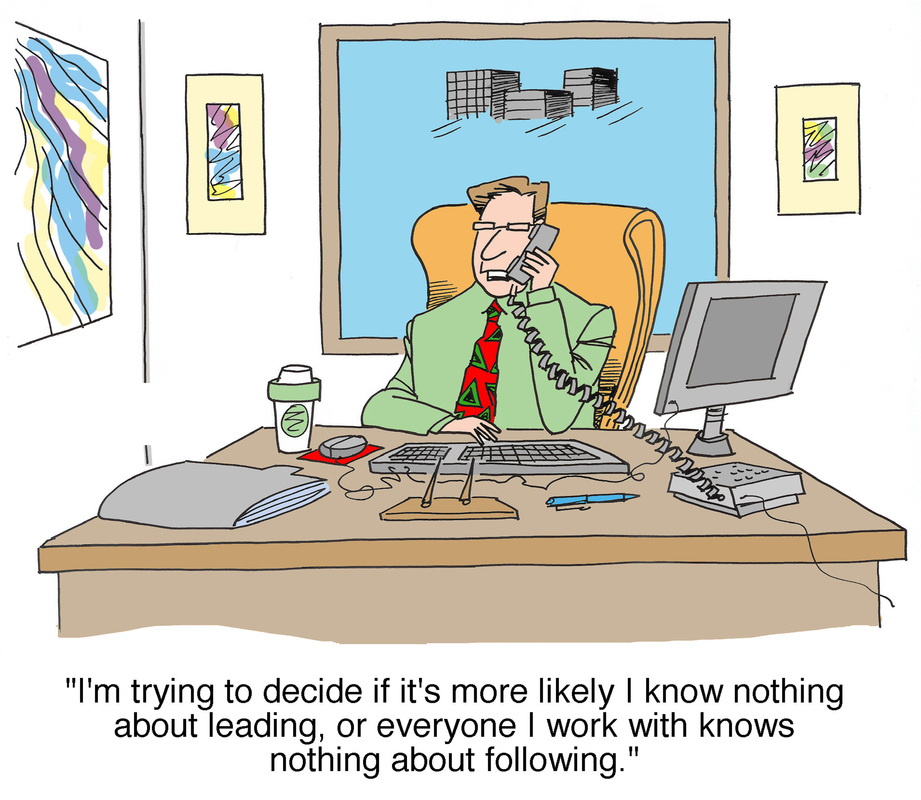

0 Comments

How a 5-Year-Old Started Management Training — Gossip, Politics, and Truth

10/7/2014

1 Comment

 
Picture
It was a hot summer afternoon in the middle of July, and I had just come home after playing outside with my friends. A good time was had by all — or so I thought. When my mother heard me come in, she asked if I would come into the living room to speak with her. A little warning bell went off and I knew there was trouble afoot! It turns out that a neighbor, the mother of a friend of mine, had come to complain to my mother that I had put tar in her daughter’s hair. The city was re-tarring the streets in the neighborhood and the gooey, black tar had been too enticing, just made for a “new hairdo.”

Rather than assume I was guilty, my mother asked me whether or not I had done the misdeed. She said that she would never take anyone’s word before mine. In fact, she had told the mother of my friend the same thing. I remember at that young age being impressed that my mother would talk to me first to get my side of the story before accusing me of something based on someone else’s accounting of the facts. At the age of 5, I learned my first management lesson — a person in charge must understand the facts before taking action. 

You might think that getting the facts before making a decision in business is common sense, and who doesn’t use common sense? Unfortunately, not being fully informed and making decisions anyway does happen, and the consequences can negatively impact employees, customers and the organization.

Not getting all the facts in a situation happens at all levels in an organization. I have seen new CEOs and other corporate management who do not yet know a company or its people make quick decisions and disrupt the organization without a full assessment of the repercussions. They either want to be seen as “action oriented,” attempting to make a quick impact, or they come from the management school that dictates that, in order to impress the board, press, analysts or shareholders, you need to do something quickly. Never mind that it may cause a problem down the road — tomorrow is another day.

I recall a situation where it was a new CEO’s first day. He called the management team into a room and showed us the new organization. We were all a little stunned as no one had even met with him yet. It doesn’t take much insight to guess that the new organization design didn’t last, and neither did he. This isn’t the only incident of this type that I have witnessed over my career. At Apple in the early 90’s there was a revolving door for executives who came in, made changes, and failed. They made decisions based on a context that was not Apple. 

In another high profile story, in 2000, after Bob Nardelli learned he would never run GE when Jack Welch left office, he took the CEO job at Home Depot and quickly proceeded to make dramatic changes to the organization, replacing its entrepreneurial culture of innovative product design with one focused on relentless cost-cutting. In the book, “How Great Leaders Think: The Art of Reframing,” the authors Lee G. Bolman and Terrence E. Deal highlight how Nardelli completely went against Home Depot’s traditions and culture that had made the company successful in his attempt to transform the company using the Six Sigma approach he learned at GE. At first his new strategy seemed to work and then the castle began to crumble with both employees and customers rebelling. In applying the Six Sigma process to Home Depot, it was clear that Nardelli did not make an effort to understand the business or culture and failed because of it.The Board of Directors ultimately ousted him from the company. (Despite this, eight months later, he became chairman and CEO of Chrysler.)

It can be tempting to skip fact-finding, and opt for taking quick action to remedy a situation. But resisting that temptation can be critical to ultimately making the right decision. In one case, I was the new head of marketing for a company with an existing team. I had “get-to-know” meetings with my staff and a number of them discussed with me a poor-performing colleague and asked that she be removed. I told them that I would monitor the situation and if my experience matched theirs, I would remove her. Within a month, I did indeed wind up asking her to leave the company, but I made sure that I personally understood what the issues were before firing her. It may have cost me some political capital with the team, but I hope it also demonstrated to them that they would get equal treatment in a similar situation.

A corollary to the example above is when the messenger is someone you know and trust. You’re busy, you want to fix the situation, and the person who relayed the information to you is someone you’ve worked with and have faith in. Regardless of who relates the information, you need to understand the truth. It may take more time than you would like to, but in the end, a clear understanding of the situation ensures that you make the right decision.

A number of years ago I worked in a company as the VP of Marketing. The CEO began exhibiting odd behaviors — sudden “organizational adjustments,” veiled negative comments and stalking people’s offices — but we all chalked it up to stress. We were a fast growing company and on the path to a liquidity event. I never understood why the majority of the executive staff had a strained relationship with the CEO until I left two years later and discovered the VP of Product had been feeding the CEO information that was untrue. This individual had worked with the CEO for several years, had his ear and was a trusted source.The CEO lost the respect of his team when people learned that he didn’t make the effort to check the facts. 

Trusting the word of someone is important but it shouldn’t overshadow the need to get to the real truth. Whatever you may think of Julian Assange of Wikileaks, his perspective on this point nails it: “You have to start with the truth. The truth is the only way that we can get anywhere. Because any decision-making that is based upon lies or ignorance can't lead to a good conclusion.”

You may be asking, “How do I know when I have enough information — and the right information — to make a decision?” Ultimately, this is a judgement call you need to make based on the situation, your experience, or the immediacy required to fix something that’s broken or move the business forward. Take the time to get the facts — and you’ll know that your decisions are sound ones.

And if all of this hasn’t convinced you of the importance of getting the facts first, there’s the story of the new divisional CEO at a global steelmaking company who had been brought in to shake things up, and was determined to rid the company of all slackers. On a tour of the facilities, the new CEO noticed a guy leaning against a wall. The room was full of workers and he wanted to let them know that he meant business. He walked up to the guy at the wall and asked, “How much money do you make a week?”

A little surprised, the young man looked at him and replied, “I make about $400 a week, Why?”

The CEO then handed the guy $1,600 in cash and screamed, “Here's four weeks' pay, now GET OUT and don't come back!” The guy left without saying a word to the CEO.

Feeling pretty good about himself, the CEO looked around the room and asked, “Does anyone want to tell me what that goof-ball did here?”

From across the room came a voice, “Pizza delivery kid from Domino’s.”

1 Comment

CEO as Brand Warrior — Elon Musk and Tesla

9/15/2014

0 Comments

 
Picture
Okay, I’m going to be honest right up front — I admire the company Tesla and love its cars. I’m thrilled by the sleek, sexy design and quiet operation of the Tesla Model S each time I see one on the road. From the day their first car was announced to today, I believe they have done a lot of things right from both a product and corporate perspective. As of September 2014 the stock is up over 60% year to date, so the market appears to believe so too. I don’t own a Tesla yet, but I will. What’s just as interesting to me, however, is their brand — what it stands for and who carries the torch.

Every time I think about Tesla the company, the brand attributes that come to mind are bold, cutting edge, not backing down, revolutionary in both design and creating change in the world — and this is all because of CEO Elon Musk. In a TED February 2013 interview, he says what drives him is, “what are the things that need to happen to make the future an exciting and inspiring one?” And this vision rubs off on the Tesla brand. Whether by design or by chance, Elon Musk has become Tesla’s brand warrior, and like a knight defending the fair lady, he is true to his mission and never backs down. He defends, protects, and represents the brand at every turn, and does so in a way that is consistent with Tesla’s values and mission. 

According to Tesla, their goal is to accelerate the world's transition to electric mobility with a full range of increasingly affordable electric cars. It’s a big statement that requires progress on many fronts in order to come to fruition. There are technical, political, eco-system, scale, cost and adoption issues to name just a few. In a gutsy but shrewd business move that is consistent with the brand, a step toward adoption and eco-system took place in June of this year, when Tesla announced that they would not initiate patent lawsuits against anyone who, in good faith, wants to use their technology. In Musk’s blog post of June 12, 2014 he writes, “Tesla Motors was created to accelerate the advent of sustainable transport. If we clear a path to the creation of compelling electric vehicles, but then lay intellectual property landmines behind us to inhibit others, we are acting in a manner contrary to that goal.” Peter Thiel, Musk’s PayPal co-founder, has a mantra: that tech should be more ambitious and solve big problems. I would say that Elon Musk feels the same and makes this the touchstone of the Tesla brand.

In 2013 there was a good deal of negative press from automobile publications to the tech press, about the Model S sedan bursting into flames after running over debris. Without missing a beat, Musk jumped to defend the company and car, and to rectify the situation. In an October 2013 TechCrunch article, Musk quotes statistics that he says point to the fact that you are 5 times more likely to experience a fire in a gas-powered car than a Tesla. His supporting math consists of the following data —  over 150,000 car fires per year for gasoline powered vehicles, which means one vehicle fire for every 20 million miles, as opposed to one fire in over 100 million miles driven for Teslas. This equates to the “5x” figure. He refused to grovel or back down, and instead relied upon facts and stood his ground. Tesla also adjusted the air suspension so that the cars do not automatically lower themselves as much at highway speeds. Now all Teslas are outfitted with a triple underbody shield and Musk committed that Tesla would, upon request or as part of normally scheduled auto service, retrofit the shields, free of charge.

Musk is also battling hard on a few other fronts:

Distribution — There is resistance in some states to Tesla selling its cars directly to consumers through its company-owned stores rather than through independently-owned dealerships. Tesla has faced dealer issues in Georgia, New York, New Jersey, Pennsylvania, Ohio and Missouri where the respective Automobile Dealers Associations have appealed to state authorities to prohibit Tesla’s initiatives to offer direct sales of new cars outside dealer networks. Musk is defending Tesla’s position with vigor to overcome this direct sales obstacle.

The Model S battery's cold-weather performance — New York Times' John Broder criticized the vehicle battery's cold-weather performance, which he said resulted in the car being towed after it ran out of juice. Once again, Musk was the public face and Tesla produced vehicle logs disputing Broder's account, which the New York Times eventually acknowledged. Broder's trip also was recreated several times without any issues.

Romney and Palin — They called Tesla a “loser” for taking a $465 million dollar loan from the Department of Energy in 2010. Musk didn’t forget the slight and Tesla paid off its DOE loan with interest last year.

Scale — In order for Tesla to fulfill the vision of “carrying the species beyond hydrocarbon reliance” they need to be able to build batteries for a large volume of cars. In a brilliant move Musk induced 5 states (CA, NV, TX, AZ, NM) to vie for the hosting of a $5 billion “Gigafactory” that will make lithium ion batteries for Tesla's all-electric automobiles. We now know that McCarran, NV is the winner. The pay-to-play opportunity expects the chosen state to absorb about 10% of the cost of building the factory, along with providing tax breaks and incentives, in return for a multi-billion dollar investment and the creation of around 6,500 manufacturing jobs. 

Musk kept the pressure on the bidding states throughout the process. In order to keep the construction timeline on target while continuing to entertain bids from CA, TX, NM and AZ, Musk quietly directed Tesla to break ground in June in three separate sites in NV. It would appear that Musk had already concluded that NV was going to be the final choice given the financial incentive package NV was offering compared to the other states.

In addition to providing scalability for Tesla’s auto manufacturing needs, the Gigafactory supports three other Musk strategies: (1) It removes dependency on overseas suppliers for a critical (indeed, probably the most critical) component for Tesla vehicles; (2) it enables Tesla to supply state-of-the-art batteries to other electric vehicle makers, breaking down a major barrier to his vision of broadening and diversifying the EV market; (3) it creates a supplementary revenue stream for Tesla, potentially subsidizing vehicle prices to increase demand for their electric vehicles. (There may also be a role for Gigafactory products and technology in offline power storage related to services provided by SolarCity, another Musk enterprise.) This kind of integration provides the Tesla brand more visibility and a broader reach.

Musk’s actions are bold, his profile grows larger every day, and his persona is intertwined with and defines the Tesla brand. In a 2012 Esquire article, Elon Musk is described as “A rich man trying to inspire a change in national consciousness. It is not enough for him to inspire Americans; he needs somehow to stand for them — to stand for more than himself — if he wants to restore this country's explorer's heart, its willingness to endure risk.” 

Elon is a man betting on and creating the future, and Tesla is coming with him. 


0 Comments

The View from C-Level. What Your Executive Staff Needs from a “Good” CEO

9/3/2014

0 Comments

 
Picture
Most CEOs want to do what’s right for the company and themselves, but have a hard time fitting in the needs of the team most affected by their actions and decisions — their executive staff. We all have our CEO stories — the very good and the very ugly — and over the past 15 years I’ve had the opportunity to have a seat at the table working with many technology start-up CEOs to see how they either successfully, or not so successfully, manage their executive teams.

My experience indicates that tech CEOs spend most of their time on product and technology trends, and very little on the people side of the equation. In Silicon Valley, it’s all about the product. By making the mistake of not focusing on people management, they’re not empowering their team and therefore not getting the multiplier effect that would ripple throughout the organization when everyone from the top down is firing on all cylinders. Worse yet, demotivating their staff.

As a CEO, the executive team is your front line, the team managing the day-to-day operations as well as supporting you. As CEO, you should be thinking, “How can I be more effective in giving my management team what it needs so that I can get the most out of the organization?”

Jack Welch, former CEO of GE wrote, “ My main job was developing talent. I was a gardener providing water and other nourishment to our top 750 people.” Many CEOs in the start-up world will tell you that managing people in a start-up is different than a big company. I agree that there are differences in things like organizational structure, skill development and process. However, I have worked in both large companies and start-ups and the same core principles of people management apply. Good management is just good management.

It’s easy to look at other people and see their faults. It’s harder to look within and see your own. If you’re interested in how your actions affect your executive team and impact the multiplier effect within the organization, read on!

The following are my “Top Ten Rules” for executive team management for CEOs to keep in mind:

1. Communicate what you’re thinking and communicate clearly. In a recent Cult of Mac interview with Ron Johnson, former head of Apple Retail, he said, “The most misunderstood thing about Steve (Jobs) was that he was the best delegator I’ve ever met. Because he was so clear about what he believed in and what he liked, because he had such clarity of purpose, when you worked with Steve you could actually operate with a lot of freedom.” Understanding how the CEO thinks and what’s important to them facilitates the executive’s decision-making and ability to take action. It frees the executive to operate independently, act quickly and stay in line with the CEOs goals. You can’t be everywhere at once and you need to be certain that the ship is always going in the right direction whether you’re barking the orders to go left or not. Take the time to figure out your plans, goals, directives, and then communicate them. You will see a world of difference.    

I’ve also seen chief executives be so vague that the team’s ability to operate is all but shut down. A former colleague related a story about a CEO who, in preparation for a board deck, would send out the slides, accompanied by a one- or two-word email asking for content for the deck. The group was all but paralyzed until they finally figured it out. It caused a lot of frustration and a lot of looking for jobs elsewhere!  You may think everyone will know what you’re saying but take it from a long-time marketing executive — read that email twice before hitting send.

2. Respect your team. If you don’t respect someone, don’t hire him or her. I once worked for a CEO who respected his team and made mutual respect a key component of team culture, and the way that the executive team worked together was nothing short of glorious. After he left the company, the group’s cohesiveness fell apart rather quickly without the former CEOs insistence on mutual respect, and the exec team fell into the normal behaviors of politics and in-fighting. It was a good lesson that I have never forgotten.

3. Don’t bully. It’s embarrassing to you and your team. There was one instance of a COO who called his staff into a meeting to publicly humiliate one of their peers. The look of horror on everyone’s face and the embarrassment felt was palpable. Frustration gets the better of us all at times, but as the leader you need to demand better of yourself. If you have a beef, talk with the person one-on-one. If you don’t want to listen to me perhaps Napoleon Hill, author of "Think and Grow Rich", probably the best-selling business book of all time, can convince you. He wrote, "No person ever became a great leader of others until he first learned to lead himself, through self-control".

4. Make reasonable demands. Don’t send your people down a rabbit hole for the sake of the hunt. While you absolutely should set the bar high—after all, you lead a group of people who are overachievers and love a challenge—make sure their expenditure of energy is linked to an expectation of success. If you want people to jump high when you need it, be considerate of their time and they will indeed achieve new heights when it matters. A CEO I know who loved data would send his team to do obscure statistical analysis that had no relevance to the business, other than to satisfy his intellectual curiosity. People started running the other way when the requests were made in the hopes that they could avoid three days of unnecessary work.

Keep people focused on what’s important to the business and when it’s time to run the extra mile your team will be right with you.

5. Treat team members equally. It’s important to build relationships across your management team to really understand what’s going on in your company. There will always be people that you are closer to, but excluding one or some of the team does not help morale or the results of the business. When people are excluded they start retreating from you and the team, and you need everyone to work together to get the best results. In the same interview with Ron Johnson cited above, when asked about his relationship with Jobs, he said that one of the first things Jobs told him was, “I don’t want you to be an employee, I want you to be a friend.” There is a tendency to focus on a small group, but as the leader you need to treat everyone the same. At a minimum, you need to build a business relationship, get to know how the person thinks, and understand their business function. One CEO I know of extends this concept to the entire company. Each week he takes a different group of people throughout all levels of the company to lunch. He gets to know who people are, what they’re doing and any issues they’re facing. What a great way to build relationships and really know what’s going on from the ground level up. This CEO creates a feeling of being on the same team and a sense of equality by spending time with everyone and not favoring just a few.

6. Practice what you preach. CEOs often champion company values. But when a CEO doesn’t exemplify those values, it’s disruptive to a company culture and creates executive team cynicism because of the simple fact that it leads to a breakdown of trust. And trust is fundamental to leadership.

Company values are instrumental in creating a strong culture but only when everyone follows them. I have seen numerous situations where a CEO operates contrary to the values he sets forth for the rest of the company, and at the first opportunity the management team runs for the door. This is damaging, particularly when hard-won talent departs. Remember, people pay attention to your actions more than you think. From Stephen Covey, who wrote the popular The Seven Habits of Highly Effective People: “What you do has far greater impact than what you say.”

7. Always be transparent — not just when it suits your purpose. Once people discover agendas that are hidden or differ from the stated direction, it leads to distrust and a breakdown of your effectiveness. I worked for one CEO where, whether the news was good or bad, it was out in the open. The relationship with his team was an inclusive one that produced a powerful esprit de corps.

8. Put your personal issues and ego aside during work hours. CEOs can easily fall into the trap of using their position to advance their own standing among their peers and within their community.  In limited cases this can contribute a halo effect that can benefit the company; otherwise, do it on your own time and money.

9. You don’t always have to be the smartest person in the room. Everyone knows you’re smart — after all, you’re the CEO. When the CEO dominates the conversation, it stops other people from expressing their views. Let other people shine, listen to their opinions — you might even be amazed. I worked for a CEO who absolutely had to demonstrate his superiority at every turn. People hated to be in meetings with him and would do their best to eliminate him from all but the meetings where his attendance was required. Some great stuff came out of those clandestine meetings and a strong level of camaraderie developed among the team as they worked together to get things done. Too bad he missed all that. He had a great team and never really knew it.  In "Think and Grow Rich," Hill writes that it's not a coincidence that history is filled with tyrants and dictators being overthrown. The most successful leaders work in harmony with their team, not in dominion over them.

10. Be kind. Top-level managers are still people. Everyone needs a little praise or act of kindness once in a while. The C- or VP-level is not expecting accolades at every turn, nor should they. However, when a job is well done, recognition goes a long way.

No one is perfect. Your job is to lead and build an effective, vibrant organization that exceeds your goals. Getting better at working with your executive team can go a long way toward creating a company and culture where people are excited by what they do, operations run smoothly, and your team is happy to come to work.

A closing thought from one of the best basketball players and team leaders in sports history: “Earn your leadership every day.” –Michael Jordan

0 Comments

Who do you want to work for?

8/28/2014

0 Comments

 
Picture
What kind of company do you want to work for? Some typical criteria applied to this question are size, customer focus, market focus, public or start-up, and culture, which is probably the most important one. How you fit in to a company’s culture is critical to your success and happiness where you work. It’s so important, I’m always curious when a company is recruiting for employees how it presents or brands itself to prospective candidates. Branding is not just a commercial, video or website. It is every facet of the company’s identity including its products, people, communications, and culture.

Often a job seeker’s first impression of a company culture comes through its brand communications. It’s an opportunity for a company to articulate what it values, and for the candidate to determine whether she is compatible with those values. The clearer the company is, the greater chance of a strong culture match and employee success. When joining a company, how many times have we forged ahead and taken a position, ignoring the danger signs of our incompatibility with a company’s culture? We either wanted to work for a particular company because it would look good on our resume, or the job was our dream job. I got great advice from an executive at my very first job. He told me that I should never work for a company that was not consistent with my values, and that the people I worked with were more important than the job. Sad to say, I have not always followed his advice and it has come back to bite me every time.

Companies often forget that culture is part of their brand, and that their brand and culture should be reflected in their recruitment efforts. Hiring in Silicon Valley is so competitive, that every advantage should be utilized. In companies I have worked for, as part of my communications objectives, I have included how the company is perceived by potential candidates. In fact, branding can be a way to set your company apart from the pack. When a company takes care to have its brand come through in its recruiting, it shows they value their culture and their brand.

I recently read an article about Evernote and their CEO and founder, Phil Libin. I was so struck by the brand promise he articulated that it led me to download their product and poke around the company. (Yes, PR actually works.) I was delighted to find that they are clear about who they are, and make sure that it resonates throughout all their communications and the product itself. I still have more investigation to do on the product side, but so far I like what I see, and the user interface is consistent with the brand.

I then started reading their website and found my way to their Career postings. The language used in the job postings reflects their mission and culture, and sends a clear message to potential candidates about their fit with the company.

“Evernote is changing the way people work. For the first time ever, you can actually love the software that you use to achieve everything that matters to you. It's a generational shift in workplace productivity, and we are making it happen…

And most of all, you’re fired up to help change millions of people’s lives for the better.”

This is a company that’s on a mission, very much like when I joined Apple and we believed we were going to change the world. It was an exciting place to be and the bond created between employees was amazing and long-lasting. The messaging I quoted above will most likely appeal to the kind of person that Evernote wants to hire, will thrive in their culture, and contribute to their success.

And then there are the perks. Many Valley companies offer competitive salaries, stock, gym memberships, three meals and so on. Less common are the following offered by Evernote:

- Housecleaning – Who doesn’t want this? It’s not much money, but what a thoughtful benefit. This impacts the whole family and shows consideration of an employee’s life outside work.

- Unlimited PTO – This shows Evernote treats their employees like adults — if your work is done you can go play.

- Annual subscription to the New York Times – Hey, they actually want you to read! As an alternative it might be nice if they offered to pay for a local paper.

- Once a year $1,000 vacation subsidy – What an encouragement to take a vacation and re-charge.

These little extras speak to the “human-ness” of the company brand, and you can bet it’s extended to how they build products and treat customers.

I plan to spend more time to get to know the product better. It would be interesting to meet the people there to confirm my suspicions of Evernote being a human-centered brand and company.

Silicon Valley is full of companies that are great places to work. Evernote is one that I recently stumbled on that felt a wee bit different and a cut above the rest. The fact that their culture and brand are reflected in their communications and recruitment messaging says they know who they are and the kind of people they want to attract.


0 Comments

A simple thank you

10/2/2012

0 Comments

 
It doesn't take much to say those two little words, "thank you", but the effect can be tremendous. I don't care how senior the person is everyone loves to be thanked when they've put out a tremendous effort on your behalf. Recognition is a powerful motivator — in many cases more than money or title — and builds personal loyalty.  It also ensures when it's time to go the extra mile again that you have someone that you can depend on. And with some of the crazy deadlines we have these days, that counts for something. As a consultant I'm constantly facing the pressure of performing large-scale efforts in a very short period of time so being thankful is important to me. And I really mean it, I am truly grateful because I would never be able to do what I do without solid resources behind me.

Throughout my career I have made it a practice to make sure that people who work with me and for me know that they, and their work, is appreciated. Unfortunately I seem to be in the minority which is really too bad. I've seen a lot of managers who either ignore the effort, have the arrogance to believe it was all them anyway (yes, I have seen this), who press for more believing this brings people to greater heights (in most cases it does not), or who are passive aggressive about it by giving you praise in one breath and knocking you down in the next. I'm not sure what's happening in the workplace these days but we should go back to the simple basics and do what makes people feel good and be decent about it. Common kindness goes a long way. Whether you're a new manager or have managed a staff for a long time, try saying thank you for a job well done and I bet you'll be pleased by the results.
0 Comments

How NOT to treat your customers

3/26/2012

1 Comment

 
I had an experience this weekend that disturbed me from both a personal and business perspective. This is a personal story but one that has a lesson for anyone in business who has customers. 

For a woman, the person who cuts your hair is sacred. I have used the same stylist for over 10 years and have been loyal to him as he built his business from the ground up. He's had some rough years, but I stuck by him and weathered all his ups and downs. I have stuck with him as his prices have risen but this weekend, he went too far. A week before my appointment he raised his prices by $40 per cut. He does not work out of a salon so basically what you get is just a haircut — no washing, no primping, no nothing. Just a haircut. He sent this message via email. No explanation, just I've raised my prices. I sent a very nice note back saying that I am now out of his price range, it's been grand, and best of luck. I got back the nastiest note with a "how dare you" tone and a "sorry to hear you won't be coming for 40 dollars" message. Oh, and they deleted me from their list of Facebook friends. As it turns out, we weren't really friends after all.

This communication could have been handled so much better if he was truly putting his customer first. I don't begrudge someone raising their prices. You should ask for what you believe you are worth, and if the market is willing to pay, then all the better. I do have a few suggestions for him however, that would have made the experience better for me, the customer, and his business. Here's what I would have counseled him to consider:

1. Give your customers more than one week to notify them of a price increase. No one likes surprises.
2. If the increase is particularly large (20% is in that category), provide an explanation.
3. Do something for your loyal customers. Make them feel good, that through their loyalty, you have built your business. 
4. Be respectful in the language that you use. When you do otherwise it makes you seem cheap and crass.
5. Be true to your brand. One incident can make it crumble and its value is lost forever in the mind of the customer. And customers talk — to other potential customers.

Please don't think this is a sour grapes post. It was a reminder lesson to me that all you really have is the good will of your customers. That relationship is very sacred and should be handled with kid gloves.It takes a lot of effort and resources to get and keep a customer.  Why would you just want to throw them away? 
1 Comment

Collaboration is great. But someone needs to make a decision.

3/5/2012

0 Comments

 
I've been reading a lot lately about the marvels of collaboration. There's always a topic of the day, and then there are those that keep turning up every few years, and collaboration is one of them.  Don't get me wrong, I'm all for it, as more brains working on something is better than one.  What people fail to discuss however, is just how decisions get made and ultimately who is responsible for failure. I single out failure because everyone shares in the success, but only one person takes the fall when things turn bad. Back to decision making.

In this collaborative world we're in, all ideas are good and everyone's a winner.  That's great, but what's important is a clear process of how to choose the best path/product/idea before you get started otherwise it becomes a free for all, wastes time, and drains morale.I love efficiency and logic and it seems to make so much more sense to get this process defined first before the fun begins. It's okay to make it democratic (most votes wins) or autocratic (one person based on data chooses) just choose and gain agreement up front. This however, requires leadership.

People are afraid of assuming leadership in a group situation, but when done well, is the most effective way of driving to a decision. Companies, both big and small need leaders that can both lead and collaborate. They need people who can step up and move the business forward in a variety of situations and gain the trust and confidence of the people in the room. So look for the leaders in your organization, nurture them, support them and provide an environment where they and the organization can thrive.
0 Comments

Management. The forgotten element.

12/30/2011

1 Comment

 
It's no secret that companies are operating in lean times. The reaction is to do more with less, pile more responsibility onto employees, expect 7x24 commitment, reduce time to market — sound familiar? And doesn't it make your pulse race? I'd like to propose another solution which is to provide great management. It's not going to solve all your problems but it goes a long way to solid execution towards a company's goals. Good management ensures focus, direction, accountability, and ultimately success.  It also reduces the frustration and disenchantment of employees. I've never met anyone who enjoyed working in a vacuum, who didn't want to understand where they fit in an organization, and who didn't want to be acknowledged and appreciated — all things a good manager does. Management does not imply adding in unnecessary layers into an organization. What it does mean, is to create structure that provides organization and enables work to flow smoothly. 

I've seen a void of good management skills in start-up companies that I work with. That lack is exhibited in action for action's sake, a list of priorities a mile long, and in my opinion is the mark of an immature management team, no matter what age they are. If a company is in it for the long haul then it should take the management of its employees seriously.
1 Comment

Good enough

10/27/2011

0 Comments

 
When is "good enough", good enough? I'd like to say never but it just ain't true.  Good enough is good enough, only when it's not really important, otherwise it should be great. Unfortunately, I've seen a lot of "good enough" in the last few years in areas where it's critical because no one wanted to take the time or spend the money to make it great. I've heard a lot of folks say that this is Web 2.0 where no one expects perfection — it's constantly evolving.  For the record, I'd like to say that this is not true.  

You only get one shot at a first impression. In a personal situation you can try and change someone's perception of you over time and it's usually a long, hard-won fight.  In a business setting, changing perception is much harder and often much more expensive. I have never looked twice at many companies because their product was poorly designed and did not work as advertised — even when in beta because by then the majority of issues should be worked out. If there was no attention paid to the user from inception chances are they won't get the religion later on. I'm a typical consumer and there are many more of me out there than an engineer who likes to tinker with products and who can be much more forgiving.  The same goes for corporate materials both online and print and customer services. If there is no attention to detail, or the information is poorly organized, written and designed, I can only guess at the mess behind the curtains.

I know this may sound harsh but if a company is serious about building a solid business then they owe it to themselves and their investors to do it right — the first time around.
0 Comments
<<Previous

    Author

    Lisa is a marketing veteran of more than 20 years working with CEOs and executive management in high technology companies and start-ups.

    View my profile on LinkedIn

    Archives

    December 2014
    October 2014
    September 2014
    August 2014
    October 2012
    March 2012
    December 2011
    October 2011

    Categories

    All

    RSS Feed

Powered by Create your own unique website with customizable templates.
